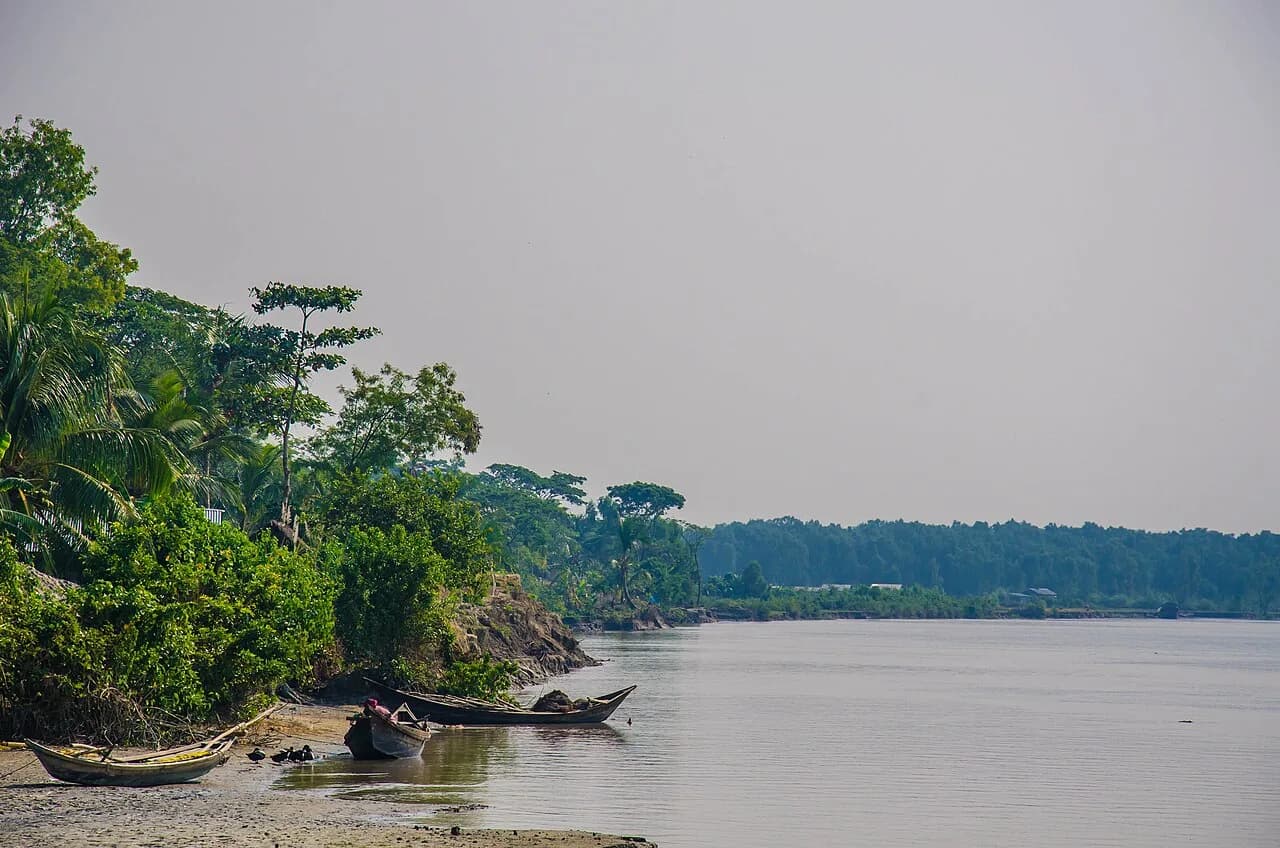
Set at the mouth of the Meghna on the Bay of Bengal, Noakhali is known for coastal islands, spotted deer and history. Its biggest draw is Nijhum Dwip National Park in Hatiya: herds of chitra deer along Chowdhury Khal at dawn and dusk, winter migratory birds on Kabirajer Char and Damar Char, sunrise and sunset at Namar Bazar beach and fresh hilsa at Kamlar Dwip.
On the mainland are the Gandhi Ashram and Gandhi Memorial Museum at Jayag, Sonaimuri — remembering Mahatma Gandhi's 1946–47 peace mission; the three-domed Bajra Shahi Mosque of 1741–42; the Musapur Closure at the Meghna mouth in Companiganj; and Rajganj Mia Bari in Begumganj. It suits nature and wildlife lovers, young camping groups and history-minded travellers. The best time for Nijhum Dwip is October to mid-April; in the monsoon paths turn to mud and the river and sea run rough.
1) By bus to Maijdee (district town): Ekushey, Bilash, Himachal, Moonlight and others from Sayedabad, some also from Jigatola and Mirpur. Sonaimuri-bound buses drop you near Jayag.
2) By train: the Upakul Express intercity from Kamalapur to Noakhali (Maijdee), about 6 hours.
3) By launch to Nijhum Dwip (the most comfortable): a launch leaves Sadarghat daily at 5:30 pm for Tamruddi Ghat, Hatiya, arriving around 9 am; the return leaves Tamruddi at 12:30 pm. From Tamruddi, fishing trawlers go to Namar Bazar before 10 am, or take a motorbike to Moktaria Ghat.
4) By road and boat to Nijhum Dwip: bus to Sonapur, reserved CNG to Chairman Ghat; then the sea truck at 8 am, a trawler or speedboat to Nalchira Ghat, Hatiya; motorbike Nalchira–Moktaria Ghat (two riders), then a trawler to Bandartila Ghat.
5) On the mainland: from Maijdee or Chowmuhani take a Sonaimuri-bound bus/CNG to Jayag Bazar (about 25 km from Maijdee); the ashram is half a kilometre away. Bajra Shahi Mosque is about 20 km north of Maijdee on the same route.
History & identity
The district's old name was Bhulua — the Bhulua kingdom lasted from the 13th to the 16th century, later becoming a vassal of the Bengal Sultanate caught between Tripura and Arakan. The Mughals took Bhulua, joined it to Sarkar Sonargaon and held off Magh raiders. In the 1660s a new canal ('noa khal') was dug to drain floodwater and a town grew round it — hence Noakhali. In 1741–42, under the Mughal emperor Muhammad Shah, Amanullah built the Bajra Shahi Mosque. The British formed Bhulua district in 1821–22 and renamed it Noakhali in 1868. After the 1946 riots Mahatma Gandhi arrived at Chowmuhani on 7 November 1946 and spent about four months walking village to village for peace; when he reached Jayag on 29 January 1947, Barrister Hemanta Kumar Ghosh donated his property. In 1951 the old district town was swallowed by Meghna erosion and the headquarters moved to Maijdee. In 1984 Lakshmipur and Feni were split off as separate districts. Bir Sreshtho Mohammad Ruhul Amin and Comrade Muzaffar Ahmad came from here; Nijhum Dwip was declared a national park on 8 April 2001.
Local food & products
On Nijhum Dwip, the Namar Bazar restaurants are known for sea fish and fried prawns — order in advance for a better meal; Kamlar Dwip is the place for fresh hilsa, and beach barbecues are popular. On the mainland, Noakhali cooking is known for fish, meat and prawns cooked with coconut, plus the local mera pitha. Jayag and Sonaimuri bazars have simple rice eateries and sweet shops; for better food go to Chowmuhani or Maijdee, where most hotels have a ground-floor restaurant.
Where to stay
• Nijhum Dwip: several resorts near Bandartila and Namar Bazar beach; you can camp on the open ground across the canal beside Nijhum Resort at Namar Bazar, tents can be rented in the national park area and camping supplies are sold at Jahajmara Bazar. Book ahead for winter holidays.
• Maijdee (district town): Hotel Purabi, Hotel Al Morshed, Hotel Rafsan, Royal Hotel, Hotel Litton at the old bus stand and Noakhali Guest House on Hospital Road — basic to mid-range.
The Gandhi Ashram and Bajra Mosque can also be done as a day trip from Dhaka.