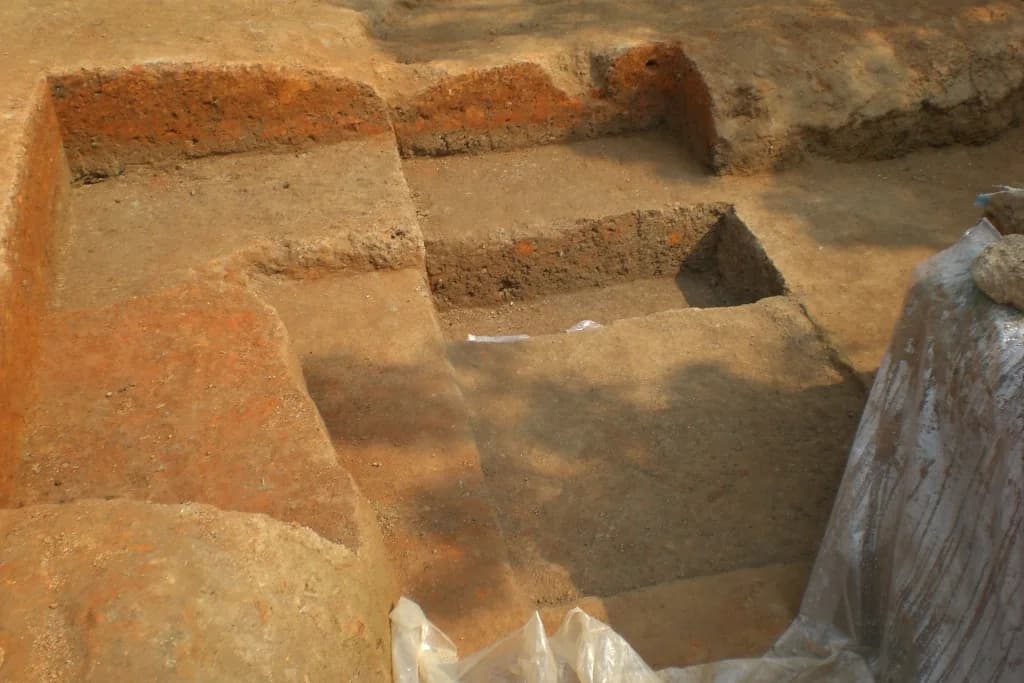
Lying between the Meghna and the Old Brahmaputra, Narsingdi is known for the country's oldest urban archaeological site, lotkon orchards and its textile craft. The excavations and open-air museum of the roughly 2,500-year-old fortified town at Wari-Bateshwar in Belabo are the main draw. Shibpur has lotkon (Burmese grape) orchards and the red-soil hillocks of Sonaimuri Tek; at Panchdona is Dream Holiday Park, with the restored house of Bhai Girish Chandra Sen close by at Meherpara; Ghorashal in Palash has Manu Mia's zamindar house, and there are the Lakshman Saha and Nabin Chandra Saha zamindar houses. Raipura holds the ancestral home and memorial museum of Bir Sreshtho Matiur Rahman, and poet Shamsur Rahman's family home at Meghna-ringed Paratali.
Mustard fields at Chandrer Para in winter and the lotkon season in the monsoon give the district two distinct faces. Two hours from Dhaka, it makes an ideal day trip for archaeology lovers, students, families and picnic groups.
1) By bus: Narsingdi buses on the Dhaka–Sylhet highway from Sayedabad, Gulistan, Mohakhali or Kamalapur. For Wari-Bateshwar, take a Bhairab-bound bus from Mohakhali to Marjal bus stand, 2–2.5 hours.
2) By train: Mahanagar, Titas Commuter or Egarosindhur from Kamalapur to Narsingdi, about 1 hr 15 min. For Raipura, the Titas, Karnafuli or Isa Khan trains stop at Methikanda.
3) Marjal → Wari-Bateshwar by CNG or easy-bike.
4) Other sights: for Shibpur's lotkon orchards get off at Srishtigarh or Marjal and take an auto; for Sonaimuri Tek get off at Kunderpara on the Narsingdi–Shibpur road and take a rickshaw; for Ghorashal get off at Ghorashal Bridge and take an auto; for Panchdona and Girish Chandra Sen's house get off at Panchdona and take an auto. In Raipura, a CNG from Baraicha to Raipura bazar.
History & identity
Narsingdi's story begins at Wari-Bateshwar: carbon-14 dates the settlement to about 450 BCE, finds include punch-marked silver coins, beads and Northern Black Polished Ware, and many archaeologists identify it with 'Sounagora', a trading town named by Ptolemy. A coin hoard was found in 1933 and Jahangirnagar University has excavated regularly since 2000. Pala and Sena rule followed, then Sultanate rule centred on Sonargaon; under Isa Khan the area was part of the resistance to the Mughals. In British times it was part of Dacca District, and Narsingdi became a separate district in 1984. Bhai Girish Chandra Sen, translator of the Quran into Bangla, Bir Sreshtho Flight Lieutenant Matiur Rahman, poet Shamsur Rahman, revolutionary Satish Pakrashi and writer Somen Chanda all came from here.
Local food & products
Narsingdi means lotkon — buy it fresh from Shibpur and Belabo orchards in the monsoon — along with its famous sagar bananas. In Shibpur, the old Hamdu Hotel by the College Gate roundabout is known for bhorta, beef and mashkalai dal; Nirala Haddi Hotel for beef shank and clay-oven kala bhuna; and the Lakkar sweet shop in Shibpur Bazar for local sweets including guava sweets. Near Wari-Bateshwar there are only tea stalls, so eat at Marjal Bazar or in Narsingdi town. Handloom cloth is also worth buying.
Where to stay
Since it is an easy day trip from Dhaka, few people need to stay. If you do, simple residential hotels in Narsingdi town or Bhairab are the options, and there are a few hotels beside Dream Holiday Park at Panchdona. There is a government rest house at Wari-Bateshwar, but check first whether ordinary visitors can book it. None of the sources we read named specific hotels, so ask and book directly.