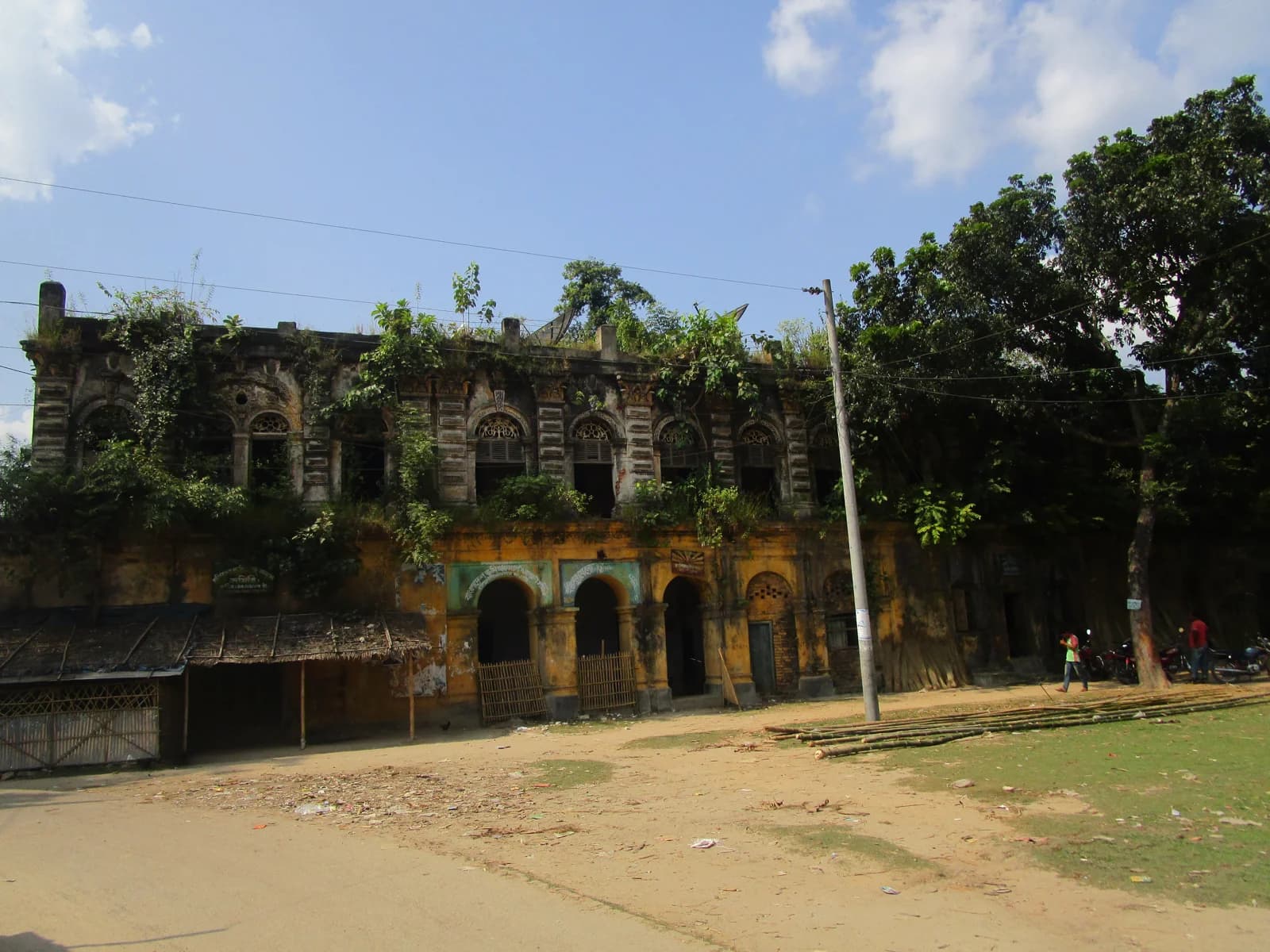
Thakurgaon is a quiet border district in the far north-west — flat paddy fields, mango orchards, sal forest, old ponds and zamindar-era buildings. Its most famous sight is the Surjapuri mango tree at Mandumala village on the Horinmari border in Baliadangi: more than 220 years old, spread over about an acre and known as one of Asia's biggest mango trees.
There are also the three-domed Balia Mosque (the 'Jinn Mosque'), Haripur Rajbari, Aadhar Dighi and Sangaon Shahi Mosque in Baliadangi, Ramrai Dighi and the sal forest along the Tangon river. For rural Bengal, heritage and mango season without crowds Thakurgaon is a good pick, and it pairs well with Panchagarh and Dinajpur on a North Bengal trip. It is far from Dhaka, so allow at least two days.
1) Bus: Hanif, Shyamoli and others from Gabtoli, Kalyanpur and nearby counters; 10–12 hours.
2) Train: Ekota Express (10:10 am), Drutojan Express (8 pm) and Panchagarh Express (10:45 pm) from Kamalapur stop at Thakurgaon Road; 9–10 hours. Check current timetables on the Rail Sheba app.
3) Air: fly Dhaka–Saidpur and continue by road.
4) Within the district: local buses or CNGs from the central bus terminal to Baliadangi, Bhulli, Ranisankail and Haripur (about 50 km). For the Horinmari mango tree, go from Baliadangi via Dangi or Lahiri Bazar by van, bus or mishuk. Balia Mosque is about 3 km east of Bhulli Hat, some 16 km from town. To cover several sites in a day, hire a CNG or microbus.
History & identity
Tradition links the district's name to the house of an influential family known locally as 'Thakurbari'; a 'Thakurgaon thana' was set up here in the 1790s. It became a subdivision of Dinajpur in 1860; after Partition in 1947 four thanas from Jalpaiguri were added, and Panchagarh became a separate subdivision in 1981. Thakurgaon became a district on 1 February 1984; on 7 May 2026 Ruhia and Bhulli were approved as new upazilas.
Among zamindar-era buildings, the foundation of Haripur Rajbari was laid in 1886 by Raghabendra Roy Chowdhury and completed in 1893 by his son Jogendra Narayan Roy Chowdhury. The inscription of zamindar Meher Baksh Chowdhury's Balia Mosque reads 1317 BS (1910 AD); after standing domeless for about a century it got new domes during renovation begun in 2010. At Shaldanga in Baliadangi there is a memorial complex to martyr Comrade Kompuram Singha.
Local food & products
Thakurgaon is mango country — the famous Horinmari tree is the Surjapuri variety (locally Lata Surjapuri), each fruit about 200–250 g; buy from orchards or markets in June–July. In winter try date-palm molasses and pitha. Upazila towns have simple rice hotels serving rice, dal, fish and chicken; better restaurants and more choice are in Thakurgaon town. Village sites have few food stalls, so carry water and snacks.
Where to stay
Decent lodging is mainly in Thakurgaon town, which has residential hotels of various standards, plus ESDO's Thakurgaon Guest House in Collegepara (Gobindanagar). Haripur, Baliadangi and Ranisankail have hardly any tourist-grade hotels, so stay in town and make day trips. If combining with Panchagarh or Dinajpur you can also overnight there.