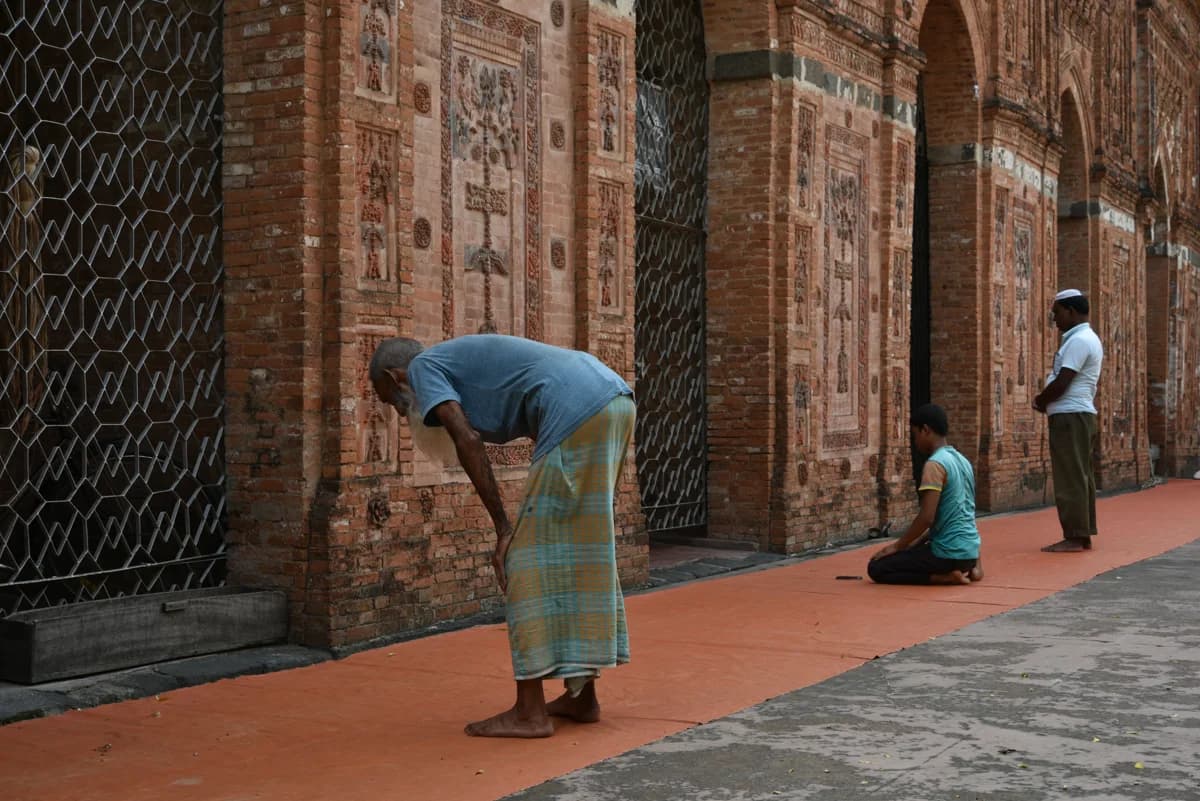
Rajshahi on the Padma is known as a clean city, the mango capital, a silk town and a centre of learning. In the city are the Varendra Research Museum, the country's oldest, founded in 1910; the riverside shrine of Hazrat Shah Makhdum Rupos; T-Bandh and the river chars for evening outings; the red buildings of Rajshahi College; the gulmohar-lined Paris Road at the university; and the central zoo. About 34 km away are the Puthia Rajbari and its terracotta temple cluster, and 40 km away the ten-domed Bagha Shahi Mosque of 1523–24, pictured on a Bangladeshi banknote.
History and archaeology lovers, students and families all find Rajshahi easy and comfortable; it is 4.5–6 hours from Dhaka by train. In the June–July mango season, or in the pleasant October–February weather, one or two nights cover the city, Puthia and Bagha comfortably.
1) By train: Banalata, Silk City, Padma, Dhumketu and Madhumati Express from Kamalapur. Silk City, for example, leaves 2:40 pm and arrives 8:30 pm (off day Sunday). Banalata is fastest at about 4.5 hours.
2) By bus: Green Line, Ekota, Desh Travels, Hanif, Shyamoli and others from Gabtoli, Kalyanpur, Shyamoli and Mohakhali; 6–8 hours.
3) By air: Shah Makhdum Airport, 45–50 minutes.
4) Getting around: auto-rickshaws and rickshaws in the city. For Puthia take any Natore-bound bus to Puthia bus stand (34 km); the palace is 1 km south. For Bagha, local buses from Shiroil bus stand or a hired CNG/car. Boat fares at T-Bandh are not fixed — bargain first.
History & identity
Rajshahi lies in the Varendra region of ancient Pundravardhana; under the Palas the Barind was an important farming and cultural centre. By tradition the area was called Mahakalgarh under Deo Raja, whom Shah Makhdum Rupos defeated in 1288–89. Sultan Nusrat Shah built the Bagha Mosque in 1523–24. Silk production grew under the Mughals, and in 1717 Murshid Quli Khan made Rajshahi one of Bengal's 13 chaklas. The Puthia royal line began around 1550, and the present palace was built by Maharani Hemanta Kumari Devi in 1895. Under the British the district was formed in 1772, an administrative office set up in 1825 gave the town the name Rampur Boalia, and the municipality followed in 1876. In 1910 Kumar Sarat Kumar Ray of Dighapatia, Akshay Kumar Maitreya and Ramaprasad Chanda founded the Varendra Research Society. Rajshahi was freed on 18 December 1971 and became a city corporation in 1991.
Local food & products
Rajshahi's signature dish is kalai roti — a thick black-gram flatbread with chilli, aubergine and tomato mash and duck or beef; there are many shops in Upashahar, Shaheb Bazar, Zero Point and Binodpur. Katakhali's beef or duck kalabhuna and hot rasgulla on C&B Road in the afternoon and evening are also popular, and Shaheb Bazar has fuchka and chotpoti in the evening. In June–July, Rajshahi mangoes are a must. Worth buying: seasonal mangoes and Rajshahi silk saris and fabric.
Where to stay
The city centre, Upashahar and Shaheb Bazar are convenient bases; Puthia and Bagha have no good hotels, so do them as day trips from Rajshahi. The city has Parjatan Motel Rajshahi, the four-star Grand River View Hotel, Royal Raj Hotel, Hotel X Rajshahi, Hotel Nice International and others across a range of standards.