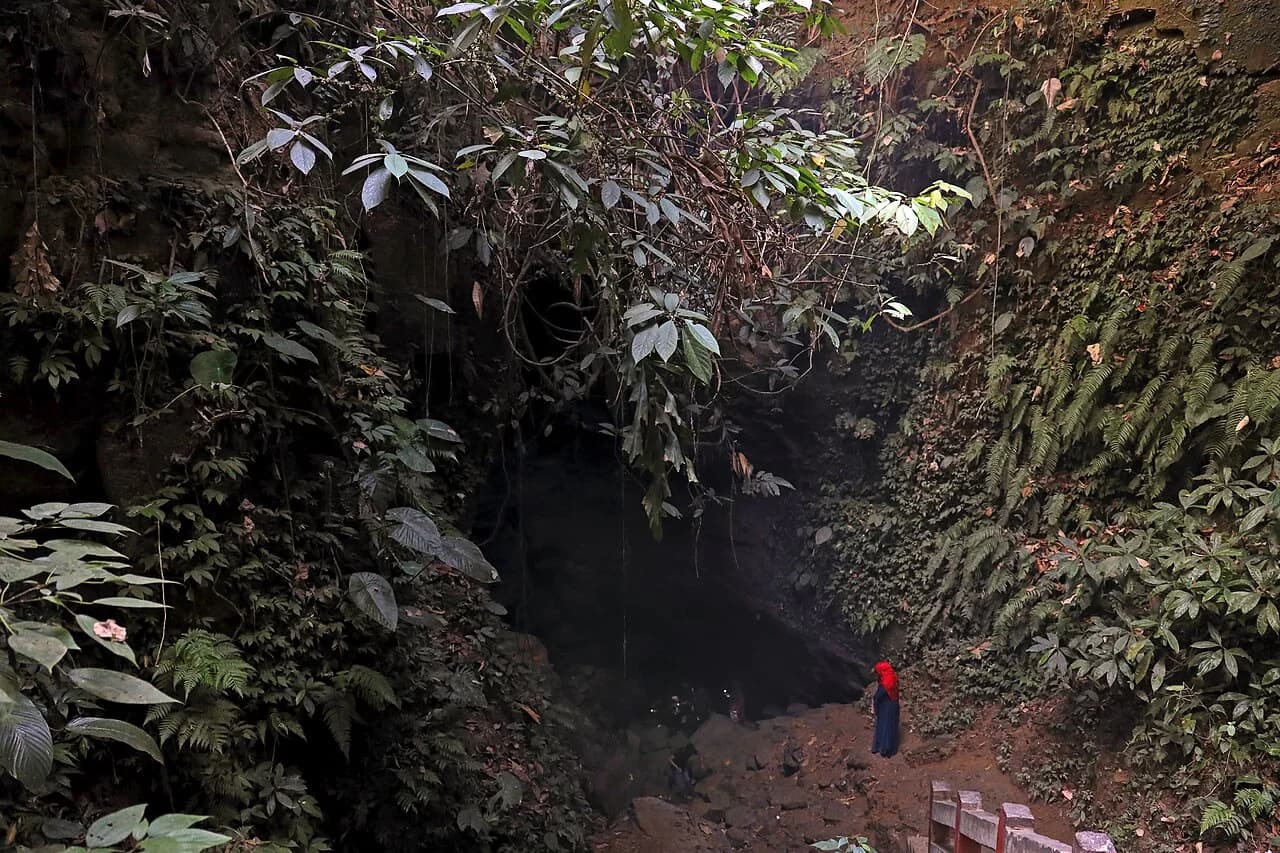
Khagrachhari is a hill district of the Chittagong Hill Tracts — green ridges around the Chengi valley, waterfalls, jhum farming and villages of the Chakma, Marma, Tripura and other communities. Near town is the Alutila tourism centre with its pitch-dark natural tunnel (Matai Hakor), hanging bridge and viewpoint; further out are Risang, Toiduchhara and Toilafang waterfalls, Debotar Pukur, Mayabini Lake, the Horticulture Park, Hatimura, New Zealand Para and Shantipur Aranya Kutir.
Khagrachhari is also the main gateway to Sajek (via Dighinala), but because of road blockades the Rangamati district administration has kept Sajek closed indefinitely since 21 October 2026 — check the latest notice before going. The district is ideal for trekkers, waterfall hunters and anyone interested in hill culture; Alutila and the parks also work for families.
Because of a road blockade by local groups, the Rangamati district administration closed Sajek to tourists indefinitely from the evening of 21 October 2026. Check the latest district notice before travelling, and confirm your resort’s cancellation terms.
1) Dhaka → Khagrachhari by bus: Shanti Paribahan, Hanif, Shyamoli, Eagle and others from Sayedabad, Kalabagan and Gabtoli; buses leaving 22:00–23:00 arrive around 05:30 (about 7–8 hours); Shanti runs direct to Dighinala. Dhaka buses pass Alutila before reaching town.
2) There is no railway; you can take a train to Chattogram and a bus on from there.
3) Getting around: hire a CNG or jeep (chander gari) at Shapla Chattar. For several spots in a day, hire a CNG (4–5 people) or a jeep (10–15 people) for the day. Waterfalls need a final walk; take a local guide.
4) Sajek: closed since 21 October 2026. When open, you go via Dighinala and join the army escort from Baghaihat camp.
History & identity
According to the district portal, the area passed between Tripura and Arakanese rulers before Sultan Fakhruddin Mubarak Shah took control in 1342. The British separated the Chittagong Hill Tracts from Chittagong as a district under Act 22 of 1860 and in 1900 split it into three subdivisions, one of them Khagrachhari. Under the traditional system most of the district (Sadar, Matiranga, Ramgarh, Manikchhari, Mahalchhari, Panchhari) falls in the Mong Circle, with some parts in the Chakma Circle.
In August 1971, 17 Pakistani soldiers were killed in a clash with freedom fighters at Ramgarh. Khagrachhari Hill District was formed on 7 November 1983, and after the CHT Peace Accord of 2 December 1997 its local council became the Hill District Council. The Chakma Biju, Marma Sangrai and Tripura Boisu at the turn of the Bengali year are the biggest festivals.
Local food & products
Try hill cooking — jhum vegetables, bamboo shoots, bamboo chicken cooked in a bamboo tube, jhum dal and mixed-vegetable pajon, served at hill-style restaurants in town (order bamboo chicken a few hours ahead). Ordinary Bengali eateries are plentiful too. Stalls outside the tourist spots sell green coconut, hill bananas and tea. Seasonal hill fruit and hand-woven cloth from local markets make good things to take home.
Where to stay
Base yourself in Khagrachhari town — Alutila is 15–20 minutes away and the waterfalls are day trips. Options include the Bangladesh Parjatan Corporation motel, Hotel Gairing, Aranya Bilas, Giri Thebar and Hotel Eco Chhari. During the 2026 Eid holidays most rooms at the bigger hotels were booked in advance, so book ahead in holiday season.