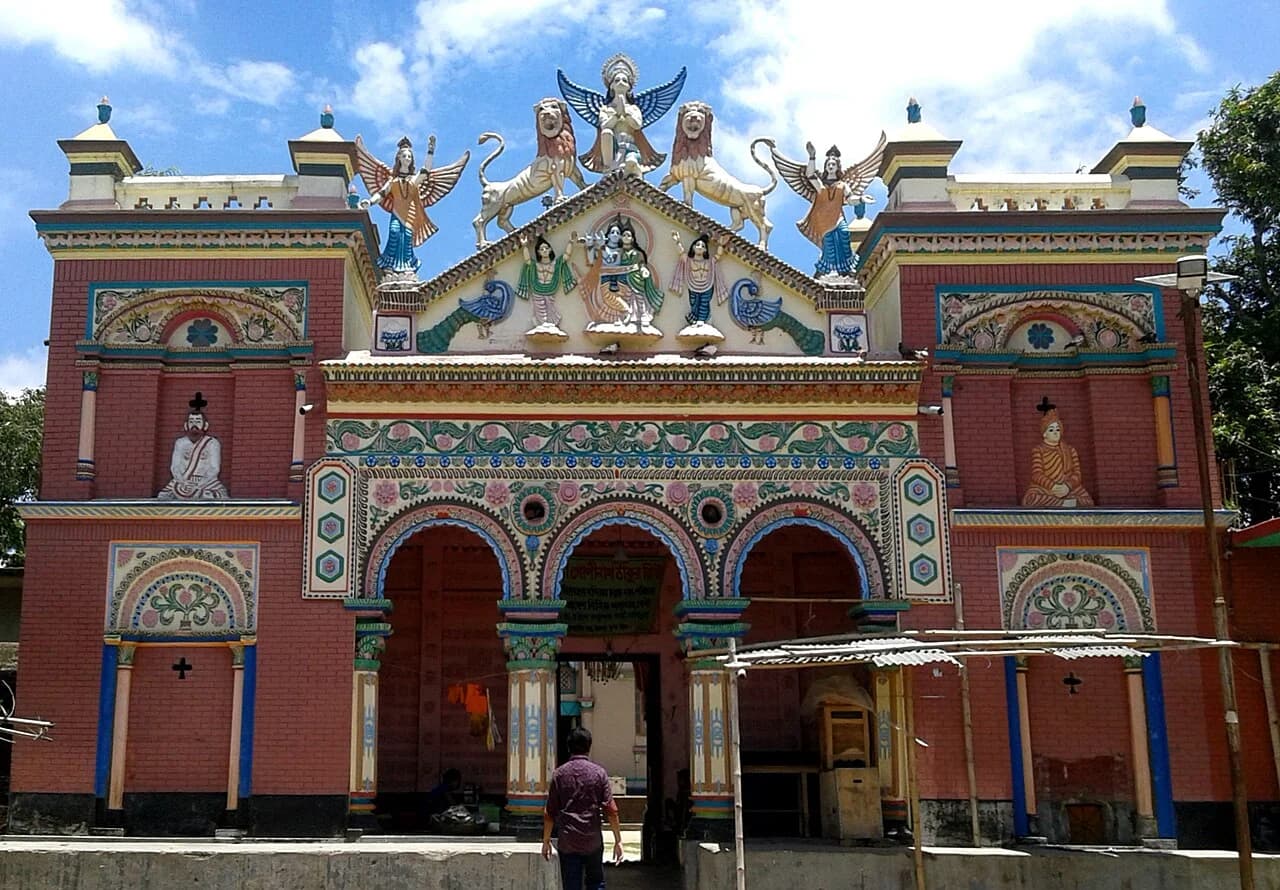
Joypurhat is a small farming district in north Bengal, with potato, rice and sugarcane fields along the Little Jamuna, Tulsiganga and Harabati rivers. For travellers its main draw is Pala–Sena era heritage: the UNESCO-listed Paharpur monastery (in Naogaon) is only 10–13 km from Joypurhat town, so most train travellers base themselves here.
Within the district you can see Barashibalay, a row of twelve identical Shiva temples on the Little Jamuna 4 km north-west of town; the Patharghata ruins and Nimai Pir's shrine at Panchbibi; Lakma Zamindar Bari; the five-domed Hinda-Kasba Shahi Mosque at Khetlal; Gopinathpur Temple at Akkelpur, with its Dol Purnima fair; the Pagla Dewan killing-field memorial; and Joypurhat Sugar Mill, one of the country's largest. It suits history lovers, families and short one- or two-day breaks.
1) By train (easiest): from Kamalapur, Nilsagar (06:40, off Mon), Ekota (10:10), Drutojan (20:00), Kurigram Express (20:45, off Wed) and Panchagarh Express (23:30) stop at Joypurhat; you can also board at Airport station. About 6 hours.
2) By bus: Hanif, Shyamoli NR, S R Travels, Jamuna Line, Ahad and others from Gabtoli or Mohakhali.
3) Getting around: auto-rickshaw/easybike from town to Barashibalay, Shishu Udyan or the sugar mill. Local bus or CNG to Panchbibi (Patharghata, Lakma), Khetlal (Hinda-Kasba) and Akkelpur (Gopinathpur), then auto or van for the last stretch.
4) Paharpur: 10–13 km from town, 20–30 minutes by local bus or CNG/easybike. Jamalganj, one station earlier, is just 5 km from the monastery.
History & identity
The area was long ruled by the Pala and Sena dynasties, though clear records before the 16th–17th centuries are scarce. It was locally called Baghabarihat, appears as Gopendraganjahat in old archives, and was known as Jaipur before the railway. When the line arrived in 1884, the station was named Jaipurhat, after a nearby market, to avoid confusion with another Jaipur station in India. In 1868 Lalbazar thana was moved to Khasbaguri (Panchbibi).
A subdivision of Bogura, Joypurhat became a district on 26 February 1984. In 1971 it lay in Sector 7, and the flag of independent Bangladesh was raised at Sadar on 23 March. Pakistani troops killed about 371 people at Barai-Kadirpur in Bambu union and several hundred at Pagla Dewan village during Friday prayers on 5 October. Joypurhat was liberated on 14 December.
Local food & products
We found no well-sourced signature dish or sweet for Joypurhat; town eateries serve rice, river fish, bhorta and vegetables. The district's best-known crop is Panchbibi's taro stolon (kochur loti) — a September 2021 report cited about 1,250 hectares under cultivation and exports to 25 countries — so buy it fresh in season. Potato, rice and sugarcane are the other main crops. At the Dol Purnima fair in Gopinathpur, huge fish-shaped sweets weighing 2–4 kg are a highlight.
Where to stay
Joypurhat town is the practical base, with simple to mid-range hotels near the railway station. Known names include Hotel Paradise International (Sadar Road), Hotel Shapla (College Road, Shantinagar) and Hotel Amin (Shantinagar Station Road). Alternatively, Naogaon town has mid-range hotels.