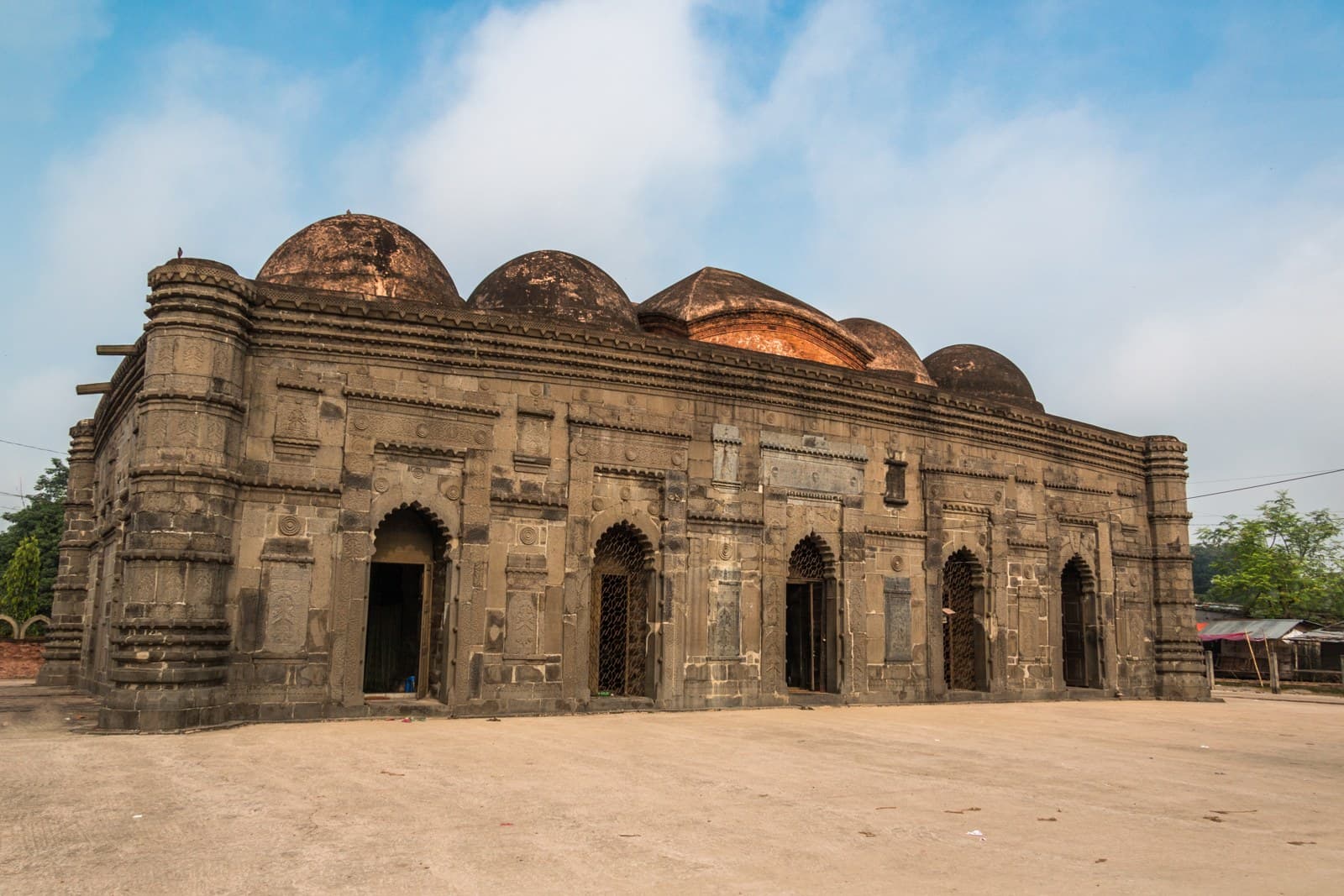
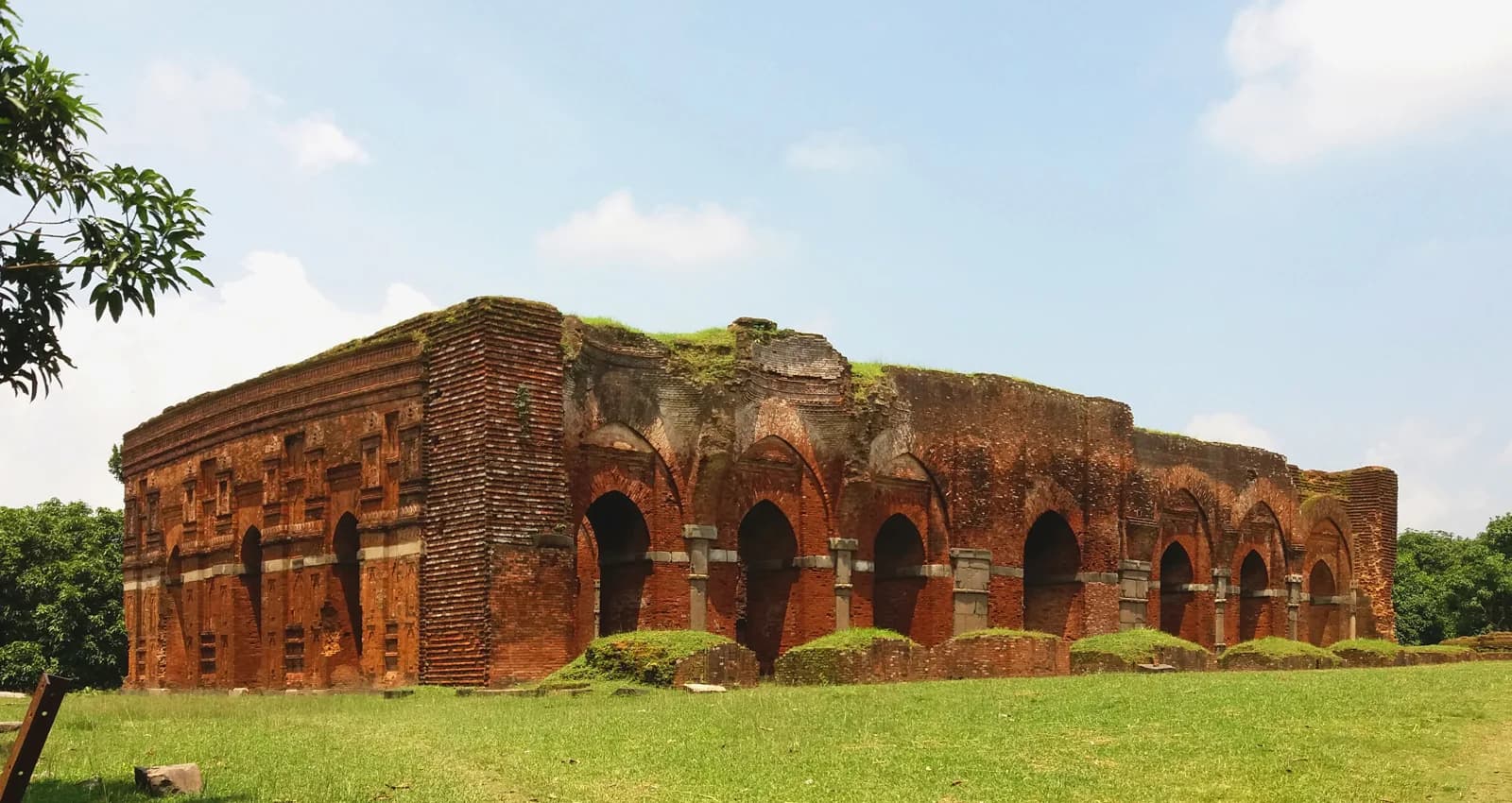
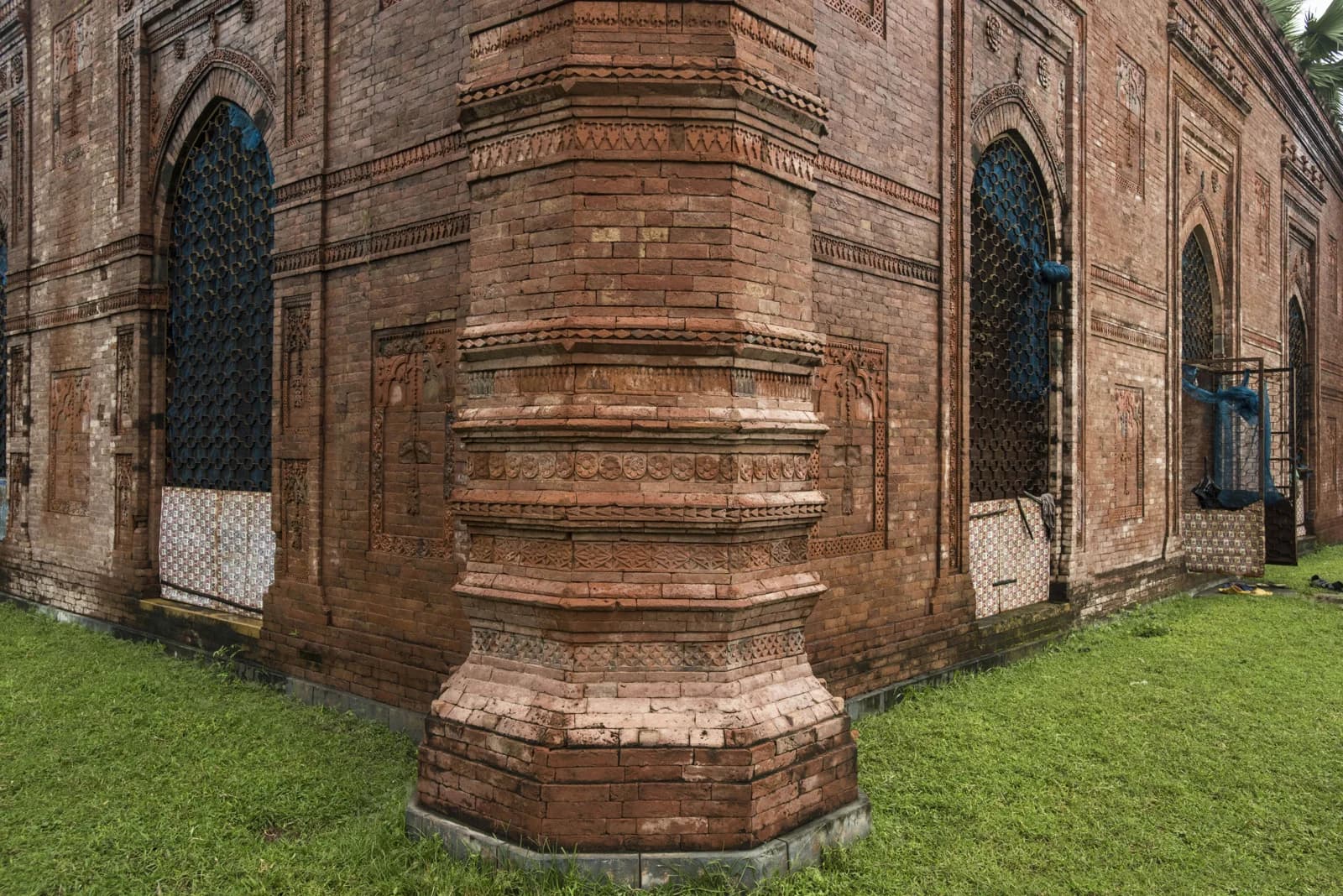
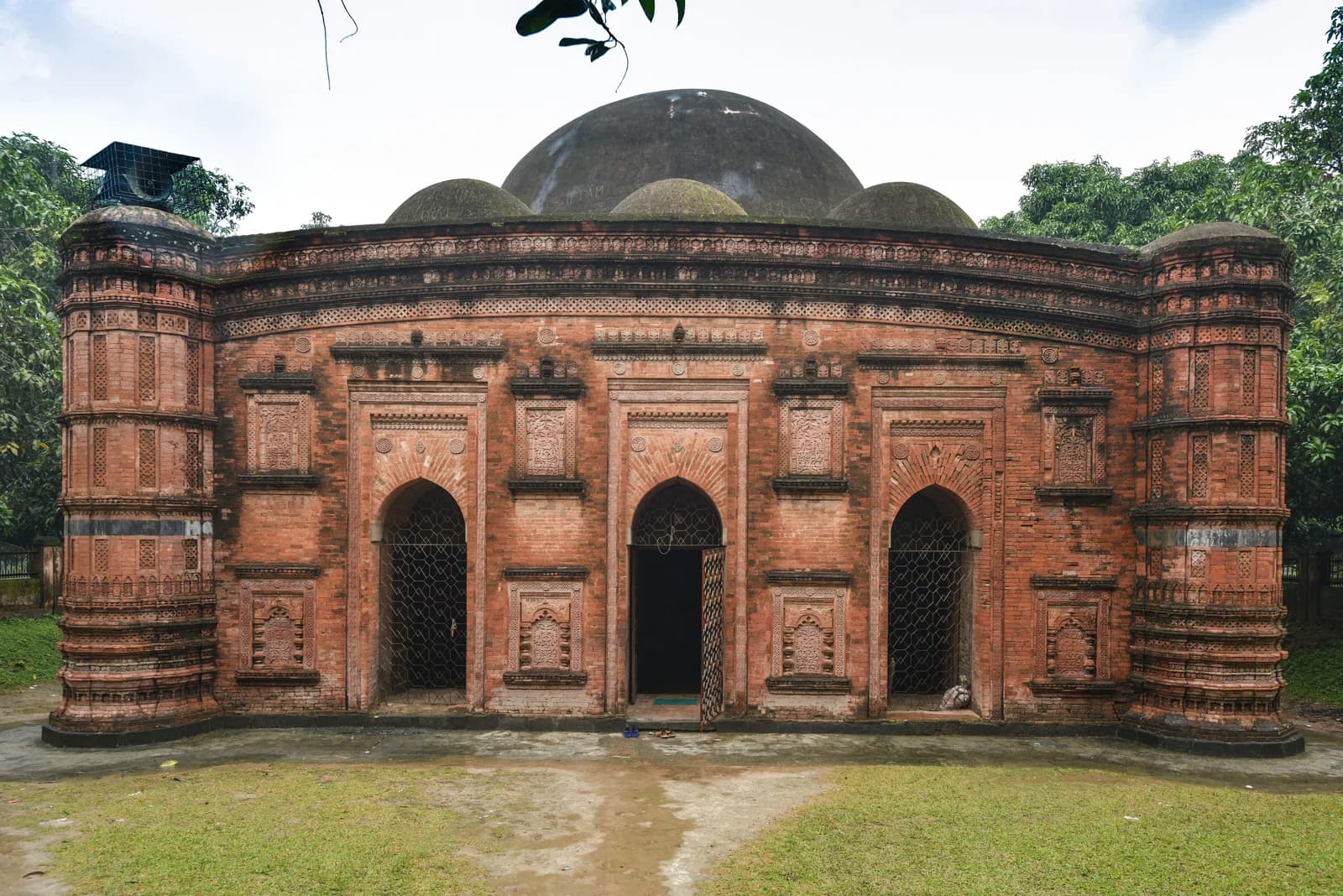
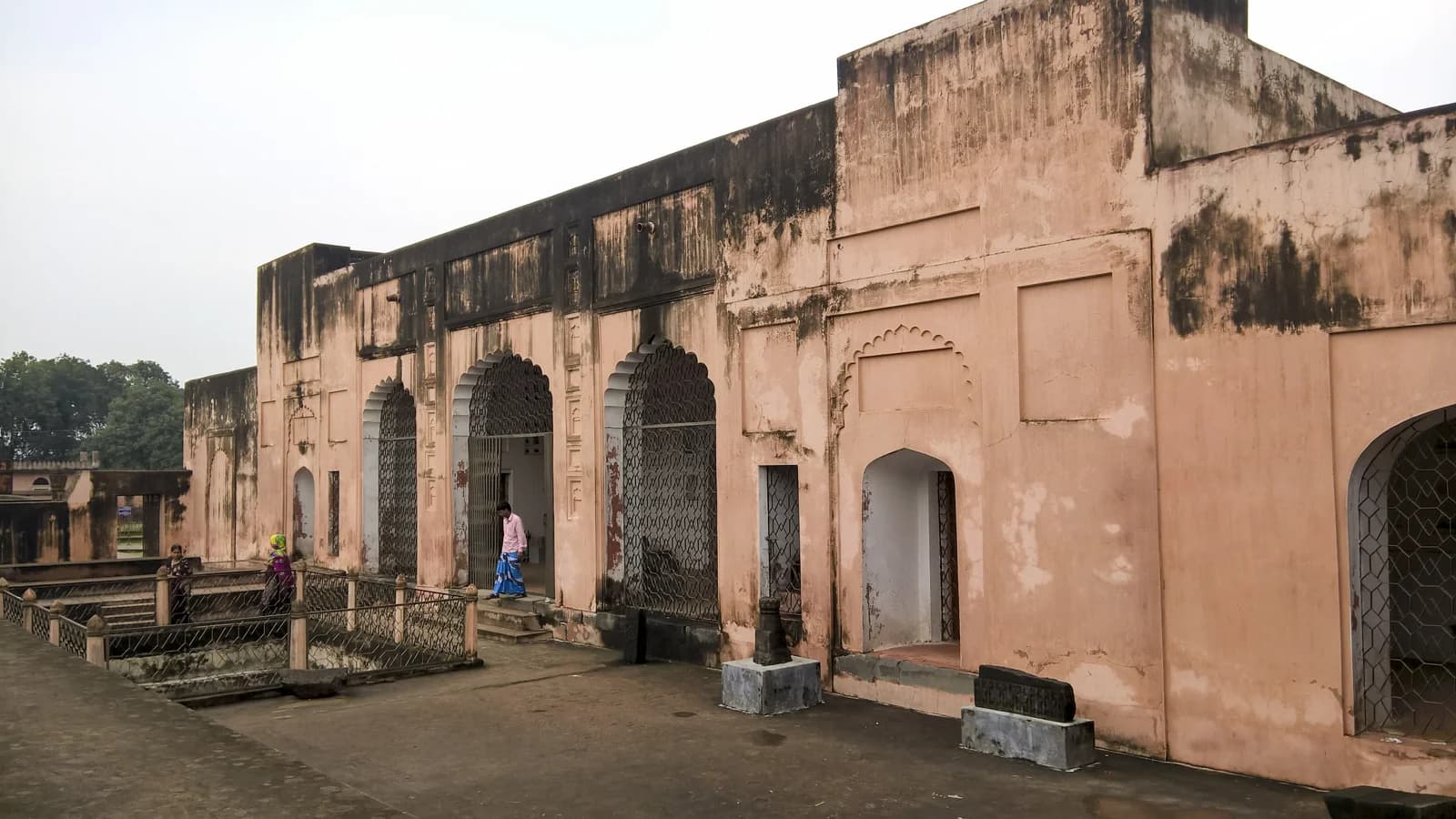
Bangladesh's 'mango capital', Chapainawabganj is also the Bangladesh side of ancient Gaur and the richest district for Sultanate and Mughal architecture. Around Sona Masjid in Shibganj you can see, close together, Choto Sona Mosque — the 'gem of Gaur' (1493–1519) — the terracotta-decorated Darasbari Mosque (1479) and its madrasa foundations, the Tahakhana complex of Shah Shuja's time with Shah Niamatullah's tomb, Khania Dighi Mosque and Dhunichak Mosque. Bir Sreshtho Captain Mohiuddin Jahangir is buried in the grounds of Choto Sona Mosque.
In June–July the Kansat mango market and the orchards around it are the district's most popular experience; at Tikoil, the 'Alpona village' in Nachole, women paint whole mud-house walls for Pohela Boishakh. It is also the home of Gambhira songs. It suits archaeology and architecture lovers, mango-loving families and photographers; being far from Dhaka, allow at least one night and two days.
1) By bus: Desh Travels, National, Hanif, Shyamoli, Grameen, Ekota and Chapai Express from Gabtoli, Kalyanpur, Mohakhali or Sayedabad; about 300 km, 6–8 hours.
2) By train: the Banalata Express leaves Kamalapur at 1:30 pm and reaches Chapainawabganj around 7:15 pm; the return leaves at 6 am and reaches Kamalapur around 11:30 am; no service on Friday. Silk City, Padma and Dhumketu run to Rajshahi only.
3) Town to the Sona Masjid area: about 38 km, roughly 1 hour by Sona Masjid land-port bus, tempo or CNG; Shibganj is on the same road. From Rajshahi, a local bus to Kansat, then an auto to the mosque.
4) Between the sites: Darasbari is about 500 m west of Choto Sona Mosque and Tahakhana about 500 m north-west — walk or take a van. A CNG hired for the day covers everything easily. For Tikoil, take a CNG about 24 km north-east of town towards Nezampur in Nachole.
History & identity
The area was part of ancient Pundra, Varendra and Gauda; the Palas ruled for over 400 years, then the Senas. After Bakhtiyar Khilji's conquest in 1204, Gaur-Lakhnauti became the early capital of the Bengal Sultanate. Sultan Shamsuddin Yusuf Shah built Darasbari Mosque in 1479; under Alauddin Husain Shah (1493–1519) Wali Muhammad built Choto Sona Mosque, and the Darasbari Madrasa followed in 1504. The Mughal subahdar Shah Shuja (1639–1660) built the Tahakhana for his spiritual guide Shah Niamatullah. When the Ganges shifted, Gaur was abandoned; later Nawab Alivardi Khan founded the town of Nawabganj. Until 1947 Nawabganj was a thana of Malda district; at Partition five Malda thanas formed a subdivision under Rajshahi, which became a full district in 1984. The 1897 earthquake brought down many of Gaur's buildings. Bir Sreshtho Mohiuddin Jahangir is buried at Choto Sona Mosque; Ila Mitra, artist Rafiqun Nabi and dramatist Momtazuddin Ahmed are also linked to the district.
Local food & products
Chapainawabganj's own dish is kalai roti — black-gram flatbread eaten with chilli-aubergine mash or meat. Shibganj's Adi chomchom is famous. In mango season Gopalbhog, Kshirsapati and Langra come first, then Fazli, Amrapali, Ashwina and Gourmoti; the district grows about 400,000 tonnes a year (June 2026). Mangoes bought at Kansat market can be couriered home, and try aam sandesh too. The Sona Masjid area has only tea and snack stalls, so eat in Shibganj or the district town.
Where to stay
There is no proper tourist lodging in the Sona Masjid area (the Department of Archaeology has a guest house; booking rules unknown). Stay in the district town:
• Sky View Inn — the better-standard hotel in town.
• Hotel Al Nahid, Hotel Rose, Hotel Swapnapuri, Hotel Rongdhonu — simpler options.
For better hotels, base in Rajshahi city and visit as a day trip. Book ahead in mango season.